

The Hollywood Networking Advice That Changed EVERYTHING For Me
I asked an executive producer for a coffee meeting, and he politely said no. It stung, but he also told me I was coming off too...
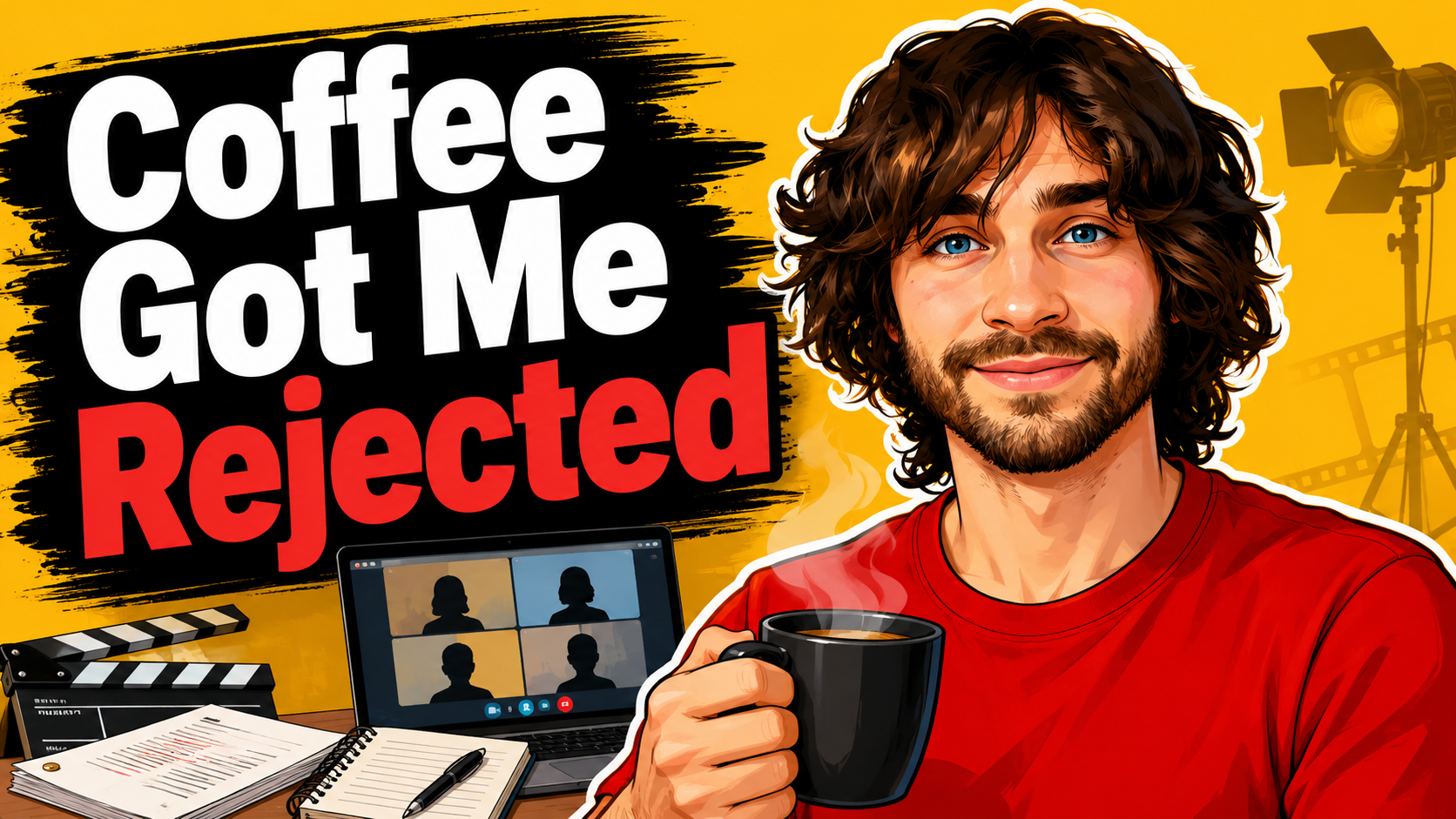
I asked an executive producer for a coffee meeting.
He said no.
Very politely.
But still.
Ouch.
He basically told me I was coming off too strong.
Which is obviously not fun to hear, but honestly, I think he was right.
Because the way I reached out to him was the same way I had reached out to a lot of other people in the film and TV industry.
I would start with small talk.
Ask questions about them.
Build a bit of rapport.
Then eventually ask if they wanted to have an online coffee meeting.
And to be clear, that approach can work.
I have used it a lot.
But I have found that it works much better with people who are around my level, or maybe a few steps ahead of me.
With people way above me, it has not worked nearly as well.
The advice this executive producer gave me was very simple.
Instead of asking senior people for a friendly coffee meeting, ask for an informational interview.
That one shift changed how I reach out to people in film and TV.
Why I stopped asking senior people for coffee first
I still like coffee meetings.
I am not anti-coffee.
I am Danish. I am basically 40% coffee at this point.
But when I reach out to someone senior in the industry, asking for coffee can be too vague.
That was the part I did not fully understand.
A coffee meeting sounds friendly, but it does not always have a clear purpose.
Do I want advice?
Do I want them to read my script?
Do I want to pitch them something?
Do I want a job?
Do I want to become best friends and build a production company by Tuesday?
They do not know.
And when people do not know what I want, it becomes very easy for them to ignore me.
Not because they are bad people.
Because they are busy.
That is the painful truth.
Why an informational interview works better
An informational interview is clearer.
I am not asking someone to hang out.
I am asking if I can ask them a few questions about a specific area where they have more experience than me.
That could be animation production.
It could be development.
It could be pitching.
It could be marketing animated projects.
It could be how they built their career.
The topic depends on the person.
That is the whole point.
When I ask for an informational interview, I give the conversation a reason to exist.
I am not saying:
“Hey, want to grab coffee?”
I am saying something closer to:
“I’m trying to learn more about this specific part of the industry, and your background in this area caught my attention. Would you be open to a quick Zoom call where I could ask you a few questions?”
That is much clearer.
And clear is good.
Beautiful.
Lovely.
Fantastic.
The person knows why I am reaching out.
They know what kind of conversation I am asking for.
They are not being asked to become my friend.
They are being asked to share knowledge.
That is a much easier yes.
Not always.
Obviously.
Some people still ignore me.
Some people are too busy.
Some people probably see my message and immediately throw their laptop into the ocean.
That is life.
But the ask itself is better.
At least it has been for me.
The message needs three things
When I reach out to someone senior now, I try to include three things.
Not my entire life story.
Not a 9 paragraph emotional manifesto about my dream of building animated comedy series before I die.
There is a time and place for that.
The first message is probably not it.
The message usually needs three things:
- What I am trying to learn
- Why I am reaching out
- Why I am reaching out to them specifically
That is the basic structure.
Very simple.
Annoyingly simple, actually.
1. What I am trying to learn
This is the most important part.
I need to know what information I am looking for before I reach out.
Not vaguely.
Specifically.
A bad version would be:
“I’d love to pick your brain about the industry.”
I hate that sentence.
I have probably written that sentence.
Still hate it.
The better version is more specific.
Something like:
“I’m trying to learn more about how animated comedy shows move from development into production.”
Or:
“I’m trying to understand how independent animation producers approach pitching adult animated series.”
Now the person knows what the conversation is actually about.
I am not making them do the mental work of figuring out why I have appeared in their inbox like a little networking goblin.
That is good.
2. Why I am reaching out
This part should be short.
For me, it might be something like:
“I’m a comedy writer and independent animation producer, and I’m currently trying to better understand how this part of the industry works.”
That is enough.
I do not need to prove my entire worth as a human being.
I do not need to list every project I have ever made.
I just need to give enough context so the person understands who I am and why I am asking.
Simple.
Clean.
No TED Talk required.
3. Why I am reaching out to them specifically
This is where a lot of outreach becomes terrible.
If my message could be sent to 500 different people without changing anything, it is probably not good enough.
People can smell copy paste desperation.
And not in a cool way.
If I am reaching out to someone, there should be a reason.
Maybe they worked on a show I admire.
Maybe they have experience in the exact area I am trying to learn about.
Maybe their career path is unusually relevant to what I am trying to build.
Whatever the reason is, I need to say it.
Not in a fake flattery way.
In a real way.
The message should basically communicate:
“I’m not just reaching out to everybody. I’m reaching out to you because your specific experience is relevant to what I am trying to learn.”
That matters.
People like knowing I did at least a tiny bit of research before landing in their inbox.
Humility matters
When I reach out to senior people now, I try to lead with humility.
Not weakness.
Not desperation.
Humility.
There is a difference.
The energy should not be:
“Hello powerful industry person, I am secretly a genius and you would be lucky to discover me.”
Please no.
The energy should be closer to:
“I am serious about this, but I know I do not know everything. You know more than I do. I would really value your perspective.”
That is much better.
I think a lot of senior people in film and TV are willing to help newer writers and producers.
Not all of them.
But a lot of them.
Especially if they can feel that I am serious.
Because they do not want to waste their time.
Nobody does.
If someone gives me 20 or 30 minutes of their time, I want them to feel like I am actually going to use the advice.
I am not just collecting meetings so I can feel productive.
I am trying to get better.
That distinction matters.
The basic message structure I use
The structure is very simple.
Something like this:
Hi [Name],
I’m a comedy writer and independent animation producer, and I’m currently trying to learn more about [specific topic].
Your background in [specific reason] caught my attention, especially [specific project, role, or experience].
Would you be open to a quick Zoom call sometime in the next few weeks so I could ask you a few questions about [specific topic]? I’m happy to work around your schedule.
Best,
Patrick
That is it.
Simple.
Specific.
Respectful.
Not needy.
Not fake.
Not “please become my Hollywood fairy godmother.”
Just a clear ask.
Final thought
If someone is around my level, a casual coffee meeting can work great.
I can build rapport.
Ask questions.
Get to know them.
Become industry friends.
Beautiful stuff.
But if someone is much further ahead than me, I now think an informational interview is often the better first ask.
It is clearer.
It is more respectful.
It gives the conversation a purpose.
And if I do it right, I get educated and build the relationship at the same time.
Which is pretty freaking powerful.
So that is the lesson I took from getting rejected by that executive producer.
Do not ask to pick someone’s brain.
Do not always lead with a friendly coffee meeting.
Ask for a specific informational interview.
Show humility.
Show hunger.
Prepare properly.
Do not waste their time.
That is the part I wish I understood earlier.


